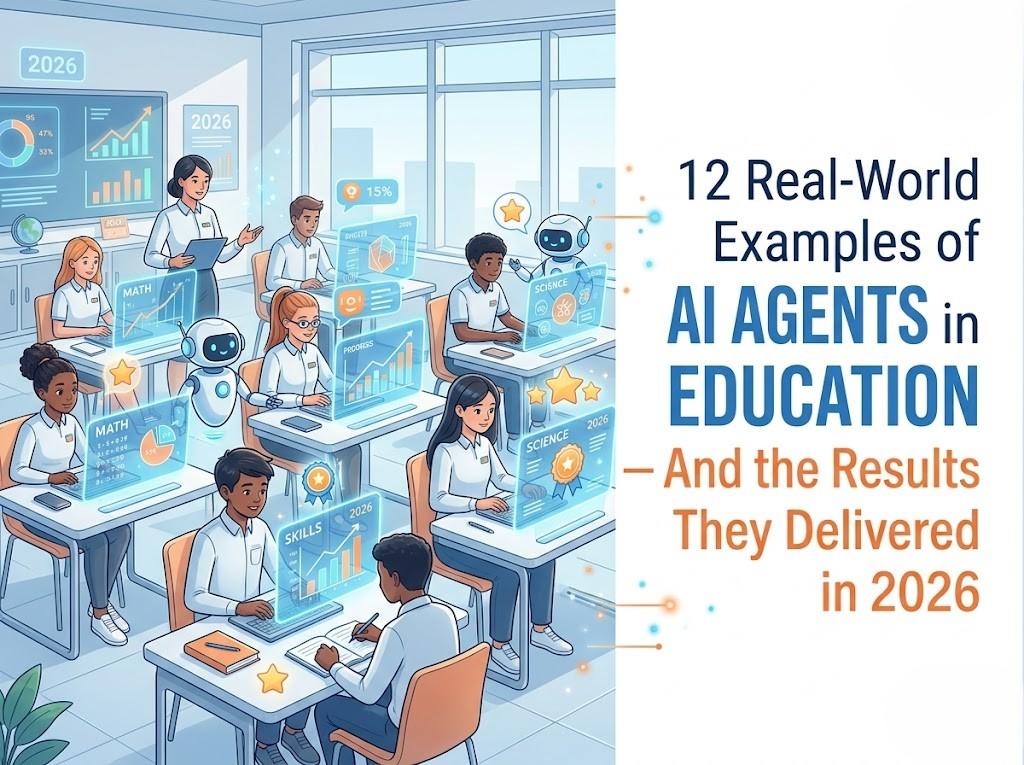
AI agents in education are autonomous software systems that can take actions, make decisions, and complete multi-step tasks — without needing a human to guide every step. Unlike a basic chatbot that answers one question at a time, an AI agent can monitor student progress, trigger support workflows, generate insights for program operators, and escalate to a human when needed.
This article covers 12 real-world examples of how AI agents are being deployed in education and learning platforms today — with the outcomes that followed.
Why AI Agents Are Changing Education in 2026
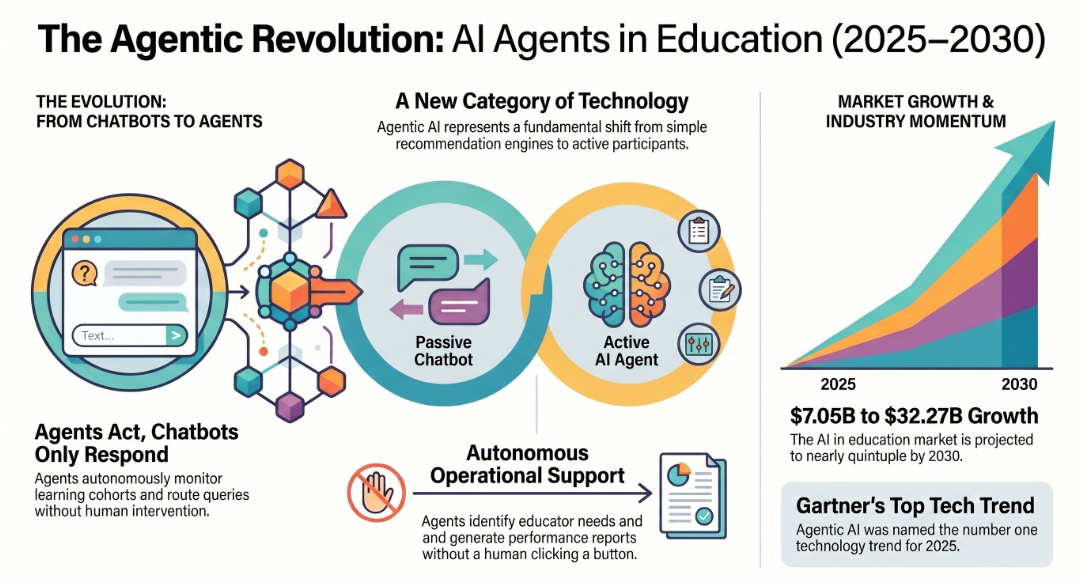
For years, "AI in education" meant chatbots that answered FAQs or recommendation engines that suggested the next video to watch. That era is over.
AI agents represent a fundamentally different category of technology. They don't just respond — they act. They can monitor an entire learning cohort, identify which educators need support, route queries to the right knowledge source, alert program operators to engagement dips, and generate performance reports — all without a human clicking a button.
Gartner named agentic AI the top technology trend of 2025, and the AI in education market is projected to grow from $7.05 billion in 2025 to $32.27 billion by 2030. The institutions and platforms moving now are the ones building durable competitive advantages.
What follows are 12 concrete examples of AI agents deployed in real education and learning contexts — what they do, how they work, and what changed as a result.
12 Real-World Examples of AI Agents in Education in 2026
1. AI Support Agent for a Global Teacher Community
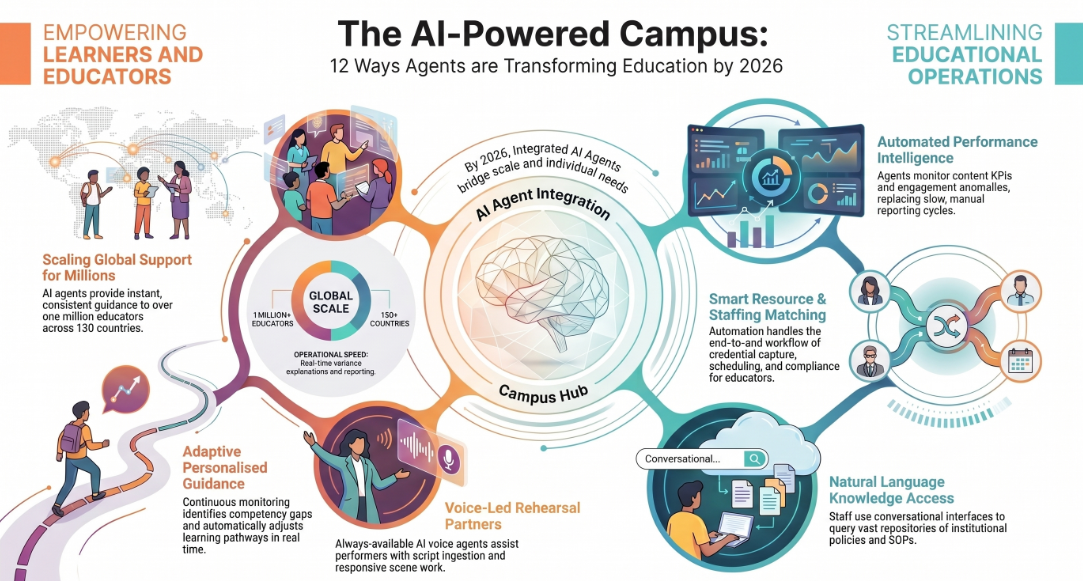
The context: A global teacher learning platform serving over one million educators across more than 130 countries needed a way to provide consistent, instant support at a scale that no human support team could match.
What the AI agent does: The agent handles program and learning queries from educators on demand, drawing on a structured knowledge base of platform content, resources, and guidance. It profiles teacher competencies, surfaces personalised learning recommendations, and routes complex queries to human specialists only when genuinely needed.
Scope of capabilities:
- Teacher profiles and competency insight generation
- On-demand support agent for program and learning queries
- Analytics for program operators and partner organisations
- Automated workflows for common educator support requests
Results delivered:
- Scalable support for a global educator community without proportional headcount growth
- Faster access to learning resources and program guidance
- Better visibility into engagement and learning outcomes for platform operators
- More consistent support experience across all 130+ countries
Why this matters for education: When you operate at a million-user scale across dozens of countries, human-first support becomes impossible to standardise. An AI agent solves the consistency problem while keeping humans available for the interactions that genuinely need them.
2. Competency Insights Agent for Educator Development
The context: Education platforms running professional development programs often struggle to translate individual interaction data into actionable competency signals for program managers.
What the AI agent does: Rather than requiring administrators to manually review activity logs, the agent continuously processes educator interactions and surfaces competency-level insights — identifying where specific teachers or cohorts are excelling, where gaps exist, and which program interventions are having measurable impact.
Scope of capabilities:
- Automated competency profiling at individual and cohort level
- Insight generation for program operators and partners
- Flagging of at-risk educators for early intervention
- Reporting dashboards with variance explanations
Results delivered:
- Program operators gain near-real-time visibility into educator development progress
- Earlier identification of cohorts needing additional support
- Reduced manual reporting workload for administrators
- More data-driven decisions about curriculum and program design
3. AI Analytics Agent for Learning Platform Operators
The context: A multi-entity learning platform needed a unified operational view across its partner and operator network — without requiring each team to build and maintain separate reporting pipelines.
What the AI agent does: The agent standardises KPIs across entities, consolidates operational data into a single reporting layer, and delivers automated variance explanations when metrics deviate from expected ranges. Program operators receive insight packs on a scheduled cadence rather than waiting for analyst capacity.
Scope of capabilities:
- Cross-entity KPI standardisation and consolidated reporting
- Operational dashboards with automated variance explanations
- Data quality monitoring and governance layer
- Scheduled insight packs for leadership and partners
Results delivered:
- Single operational view across all entities
- Faster leadership reporting and issue identification
- Improved consistency of operational metrics across the network
- Reduced dependency on manual data preparation
4. AI Voice Agent for Rehearsal and Skill-Building
The context: A learning platform for performing artists needed to give users a way to practise scene work, run lines, and build performance skills outside of formal sessions — without always requiring another human to be present.
What the AI agent does: The voice agent acts as an always-available scene partner. It ingests scripts, manages scene context, controls pacing and character voice, and supports self-directed rehearsal workflows. It adapts to the user's cues in real time and provides a consistent, responsive practice environment.
Scope of capabilities:
- Script ingestion and scene management
- Voice agent with character and voice control, pacing and cue logic
- Self-tape workflow support and rehearsal analytics
- Cost-controlled inference deployment for scalable usage
Results delivered:
- Higher rehearsal throughput without requiring human readers
- More consistent practice loops for learners
- Improved readiness and reduced coordination friction for self-directed study
- Scalable access to practice support regardless of time or location
Why this matters: This is a clear example of AI agents moving beyond academic settings into professional skills development — a growing category within EdTech.
5. AI Agent for Personalised Learning Guidance at Scale
The context: Large-scale learning platforms face a structural challenge: the more users they have, the harder it becomes to deliver personalised guidance. Static content paths cannot adapt to individual progress or flag when a learner is falling behind.
What the AI agent does: The agent monitors learner progress in real time, identifies competency gaps, adjusts recommended pathways, and surfaces proactive alerts for program managers when engagement drops below threshold. It operates continuously — not just when a learner actively requests help.
Scope of capabilities:
- Continuous progress monitoring and gap identification
- Personalised resource recommendations based on learner profiles
- Proactive alerts for at-risk learners
- Integration with program management dashboards
Results delivered:
- Learners receive timely, relevant guidance without manual intervention
- Program managers identify struggling cohorts earlier
- Platform engagement improves as content paths better match learner needs
- Operational overhead for personalisation drops significantly
6. Omnichannel Support Agent for Education Platforms
The context: Education platforms serving large user bases across web, email, and messaging channels often face inconsistent support quality — some channels get fast responses, others go unanswered for days.
What the AI agent does: The omnichannel agent handles intake from all channels simultaneously — web chat, email, and messaging platforms — classifies intent, routes to the right knowledge source or human team, and maintains a consistent support experience regardless of the channel the user chooses.
Scope of capabilities:
- Omnichannel intake with unified workflow routing
- Agent-assist summarisation and next-best-action suggestions
- SLA monitoring and escalation logic
- Auditability and reporting across all channels
Results delivered:
- Faster case handling and more consistent response quality
- Reduced operational load through automation of routine queries
- Better compliance readiness through full audit trails
- Improved learner and educator experience across all touchpoints
7. AI Agent for EdTech Content Performance Intelligence
The context: Content-driven education platforms — those delivering courses, programs, or curriculum through digital channels — need to know what content is performing, which formats drive completion, and where learners disengage. Manual analysis of this data is slow and inconsistent.
What the AI agent does: The agent monitors content KPIs continuously, flags engagement anomalies, generates automated reporting summaries, and surfaces insights on which content themes are driving measurable learning outcomes. It replaces the cycle of manual reporting with an always-on intelligence layer.
Scope of capabilities:
- Continuous content KPI monitoring and anomaly flagging
- Automated reporting summaries and insight generation
- Analytics for content ROI and learner engagement
- Brand-safety and quality checks for platform content
Results delivered:
- Reduced manual operations across content performance workflows
- Faster visibility into what is and isn't working
- More consistent reporting and learnings across programs
- Platform operators can act on content insights in near-real-time
8. AI Agent for Creator and Educator Discovery in Learning Networks
The context: Some education platforms operate marketplace models — connecting educators, subject matter experts, or content creators with learners and institutional partners. Matching the right creator to the right opportunity manually is slow and doesn't scale.
What the AI agent does: The agent enriches educator and creator profiles automatically, runs campaign workflow automation, monitors performance data, and surfaces recommendations for which educators should be matched to which programs or partnerships.
Scope of capabilities:
- Creator and educator discovery enrichment
- Campaign workflow automation and performance tracking
- Analytics for engagement, completion, and program ROI
- Automated reporting and brand-safety monitoring
Results delivered:
- Faster matching of educators to programs without manual coordination
- More scalable execution of multi-educator programs
- Better performance visibility for platform operators
- Reduced manual workload across program management teams
9. Agentic Analytics for Program Revenue and Operational Performance
The context: Education businesses — from training providers to professional development platforms — need to track revenue performance, operational efficiency, and learner outcomes in one place. Most still rely on manual BI processes that lag behind actual business conditions.
What the AI agent does: The agent builds a unified analytics layer across revenue, operations, and learner outcome data. It monitors for exceptions, explains variances in plain language, and delivers automated action lists for billing and operational workflows. Leaders get insight without waiting for analyst capacity.
Scope of capabilities:
- Revenue and utilisation analytics model
- Performance dashboards with variance explanations
- Action lists for billing workflows and operational optimisation
- Automated alerts for exceptions and early risk signals
Results delivered:
- Faster strategic visibility without BI queuing
- Improved alignment through consistent metric definitions
- Earlier detection of revenue leakage and operational inefficiencies
- Scalable insight access across leadership and operational teams
10. AI Agent for Staffing and Resource Matching in Education Organisations
The context: Education organisations — particularly those running large-scale delivery programs across multiple locations — face significant operational complexity in matching qualified educators and specialists to programs, managing scheduling, and ensuring compliance with qualification requirements.
What the AI agent does: The agent automates the end-to-end staffing workflow: talent onboarding, credential capture, facility or program intake, matching logic, scheduling, notifications, and compliance tracking. It surfaces fill-rate and utilisation reporting for operations leaders.
Scope of capabilities:
- Talent onboarding and credential capture automation
- Program staffing request intake and matching logic
- Scheduling, notifications, and compliance workflows
- Reporting for fill-rate, utilisation, and workforce performance
Results delivered:
- Faster fill cycles and lower scheduling friction
- Better workforce utilisation across programs
- Improved staffing responsiveness for delivery teams
- Reduced administrative burden on operations staff
11. AI Agent for Institutional Knowledge Access and Governance
The context: Large education organisations — institutions, multi-campus operations, and enterprise learning platforms — accumulate vast amounts of policy documents, SOPs, program guidelines, and operational knowledge that staff struggle to access quickly and consistently.
What the AI agent does: The agent builds a semantic layer over all structured and unstructured institutional data — policies, documents, databases, and operational guidelines. It exposes this through a natural language query interface, so staff can get governed, accurate answers without searching through document repositories manually.
Scope of capabilities:
- Unified context engine over structured and unstructured data
- Semantic governance layer for consistent definitions and rules
- Natural language query (NLQ) interface for self-serve access
- Active orchestration layer integrated with core institutional systems
Results delivered:
- Shift from reactive document-searching to proactive knowledge access
- Standardised decision logic across departments and campuses
- Automated task creation and tracking from knowledge-driven workflows
- Improved operational transparency for leadership
12. AI Agent for Programme Operations Automation in Smart Learning Infrastructure
The context: Some education platforms operate as part of broader smart city or infrastructure environments — managing learning operations, community services, and citizen-facing programs at city scale. This requires AI agents that can handle not just individual queries but orchestrate entire operational workflows across a connected ecosystem.
What the AI agent does: The agent provides agentic analytics on top of existing operational systems, automates alerting and exception management, and converts dashboard insights into governed, auditable tasks. It connects learning and community program data into a single intelligence layer that operators can act on directly.
Scope of capabilities:
- Agentic analytics layer over existing operational data
- Automated alerting and exception management workflows
- Insights-to-action agents integrated with core systems
- Dashboards with executive and operational views
Results delivered:
- Shift from reactive reporting to proactive execution loops
- Higher operational visibility across programs and services
- Automated task creation and completion tracking at scale
- Better decision support for leadership across large, distributed operations
What Makes a Good AI Agent for Education? A Practical Buyer Guide
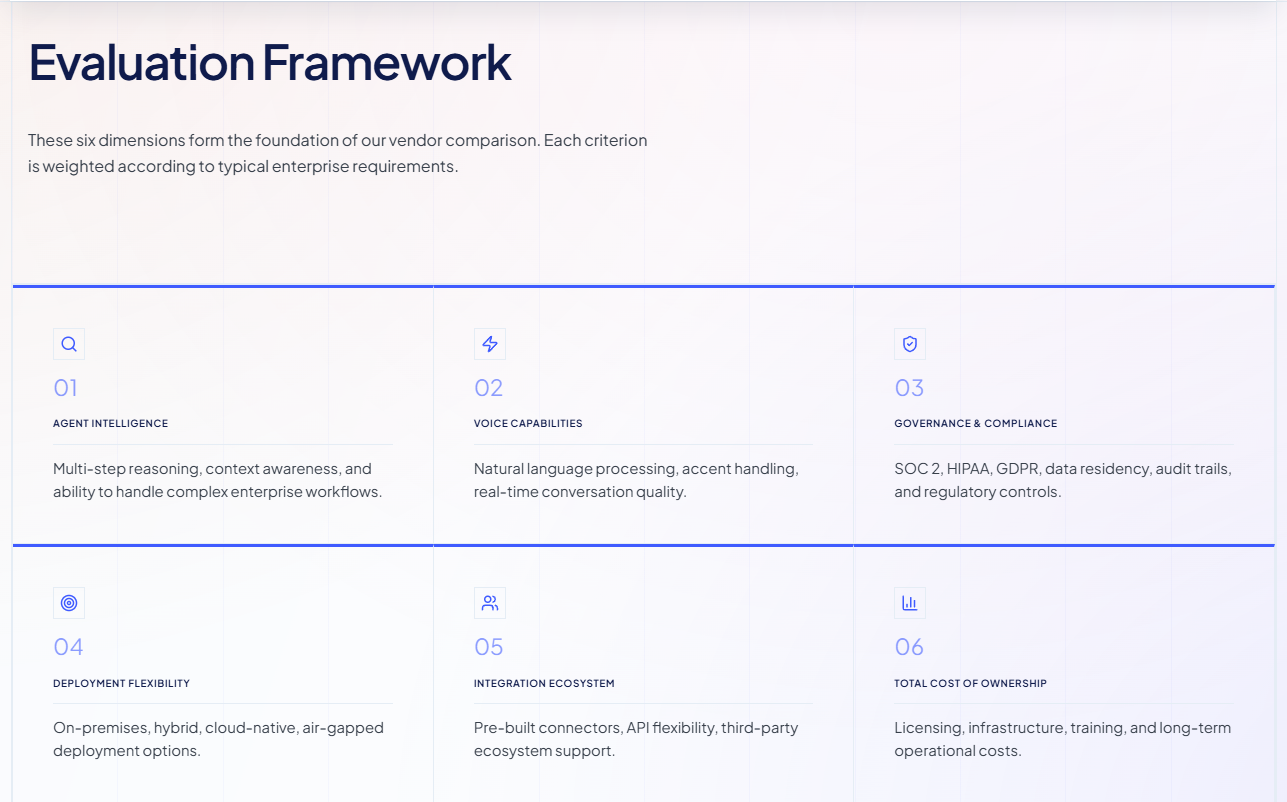
If you're evaluating AI agents for an education platform, learning organisation, or EdTech product, these are the capabilities that separate systems that scale from those that don't.
1. Autonomy with governance A good education AI agent can complete multi-step tasks without constant human prompting — but it operates within defined rules, approval workflows, and escalation logic. Ungoverned autonomy creates risk; well-governed autonomy creates leverage.
2. Multi-agent architecture Complex education workflows — from learner support to program analytics to staffing — benefit from specialised agents working together rather than one monolithic system trying to do everything. Look for platforms that support orchestration across multiple specialised agents.
3. Full auditability Education platforms handle sensitive data about learners, educators, and institutional performance. Every agent action should be logged, traceable, and reportable. Auditability is not optional.
4. Integration readiness The best AI agents connect to the systems you already use — LMS platforms, HR tools, CRM, analytics infrastructure, and communication channels. Closed systems that require full data migration create more risk than they solve.
5. Scalable without proportional cost growth The defining economic advantage of AI agents in education is the ability to serve more learners, educators, and operators without proportional headcount growth. Evaluate whether the system's cost model reflects this.
6. Human-in-the-loop design The best education AI agents are designed to involve humans at the right moments — not to replace human judgment, but to amplify it. Look for clear escalation paths, override mechanisms, and transparent decision logic.
Common Challenges — and How to Navigate Them
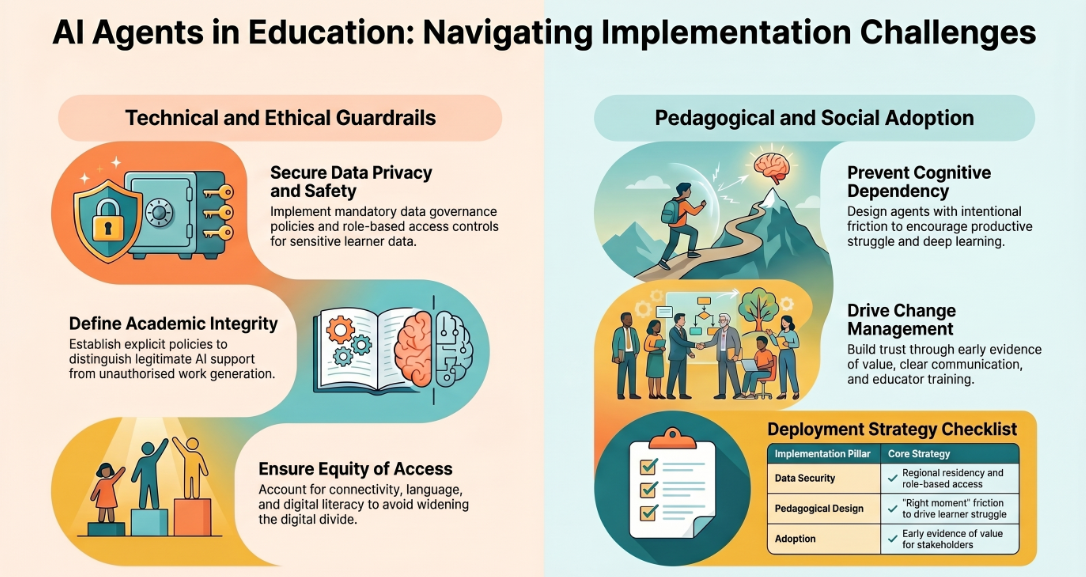
Deploying AI agents in education is not without complexity. Here are the most common challenges and how thoughtful implementations address them.
Data privacy and student safety: AI agents in education process sensitive learner data. Compliant implementations require clear data governance policies, regional data residency where required, and role-based access controls. This is non-negotiable.
Overreliance and cognitive dependency: There is legitimate research concern that always-available AI support can reduce the productive struggle that drives deep learning. Good agent design builds in friction at the right moments — encouraging learners to attempt before receiving guidance.
Academic integrity: AI agents that assist with coursework need clear guardrails around what constitutes legitimate support versus generating work on a learner's behalf. This requires explicit policy design, not just technical controls.
Equity of access: AI agents have the potential to dramatically expand access to high-quality support — but only if deployment accounts for connectivity, language, device access, and digital literacy across diverse learner populations.
Change management: Technology is rarely the hard part. Getting educators, administrators, and learners to trust and adopt AI agents requires clear communication, training, and evidence of value early in the deployment.
Build Your AI Agent for Education with Assistents.ai
The examples above come from real implementations across education platforms, learning communities, and EdTech operators. What they share is a common starting point: a clearly defined workflow that needs to scale, and an AI agent built to match it precisely.
At Assistents.ai, we build AI agents for education platforms and learning organisations — from teacher support and competency analytics to program operations automation and multi-agent infrastructure. If you're ready to move from exploring to building, let's talk.
FAQs
What is an AI agent in education?
An AI agent in education is an autonomous software system that can take actions, make decisions, and complete multi-step tasks to support learners, educators, and platform operators — without requiring a human to direct every step. Unlike a basic chatbot, an AI agent can monitor progress, trigger workflows, generate insights, and escalate intelligently based on context.
How is an AI agent different from a chatbot in education?
A chatbot responds to single queries with pre-defined or generated answers. An AI agent goes further: it can initiate actions, monitor data over time, connect to multiple systems, complete workflows, and make context-aware decisions across an extended interaction or process. An AI agent can do what a chatbot describes.
What are the benefits of AI agents for teachers and educators?
AI agents can provide teachers with on-demand support for program and learning queries, personalised competency insights, automated administrative workflows, and analytics that highlight where learners need additional attention. The primary benefit is time: teachers get back the hours currently spent on routine queries and reporting, and redirect them to high-value instruction and relationships.
Can AI agents replace teachers?
No. AI agents are most effective when they handle scale, speed, and consistency — freeing educators to focus on the interactions that genuinely require human judgment, empathy, and relational intelligence. The goal is augmentation, not replacement.
How do I get started with an AI agent for my EdTech platform or learning organisation?
The most effective starting point is a well-scoped problem — a specific workflow that is high-volume, repetitive, and currently bottlenecked by manual effort. Common starting points include learner support triage, educator competency reporting, and program operations analytics. From there, you build toward an integrated, multi-agent architecture as confidence and capability grow.
What results can I realistically expect from AI agents in education?
Based on real deployments, education platforms have seen faster support response cycles, better learner engagement visibility, reduced manual reporting workload, and the ability to serve significantly more users without proportional headcount growth. The most important results are the ones tied to your specific operational bottlenecks — which is why starting with a clearly defined problem produces better outcomes than deploying broadly.

.jpeg&w=3840&q=75)